Sahara Project
A pilgrimage to retrace Ancestors steps
More than a journey.
A pilgrimage.
I am retracing old caravan roads of the trans-Saharan trade routes, walking in the footsteps of my Amazigh ancestors. For me, the 2,500km walk is at once a physical challenge, a spiritual return, and a reclamation of identity after years of denying my roots in a world marked by racism.
Growing up French-Tunisian, I often hid my Tunisianity — the very ancestry that now gives me strength. This walk is my way of honouring that legacy, reminding North African women that they carry Warrior Queens in their blood.
The Sahara Project is also a political statement. Tunisia still does not recognise Amazigh people in its constitution. This journey is my way of declaring that First Nation identity, culture, and wisdom matter; and must be protected.
The desert itself is a living archive of ancient knowledge (healing practices, ecological wisdom, and oral traditions) much of it overlooked or silenced by colonisation, systemic erasure of First Nation cultures, and male-dominated anthropology. In my own upbringing, Amazigh traditions survived disguised within Muslim customs: hidden, ridiculed, or stripped of their origins.
As climate change and cultural homogenisation accelerate, this wisdom is at risk of disappearing forever.
On the periphery of this pilgrimage, I will also begin the long-term work of conserving women’s knowledge. Too often dismissed or erased; ensuring these threads of resilience remain alive for future generations.
The Sahara Project is a reclamation of roots, land, and memory. It is both a deeply personal pilgrimage and a collective reminder: our ancestors left us the tools to face crisis with courage, adaptability, and belonging.
My Return
I grew up between Tunisia, France, and Algeria. For years, I denied my Tunisian roots as a way to survive racism as a child. In the healing process and in reclaiming my Tunisianity, I realised how Tunisia itself is denying its Amazigh origins through cultural erasure and racism. Now, I return to walk the caravan roads of my ancestors — as a woman, as a Tunisian, as myself; inspired by the women in my mother’s lineage and the Warrior Queen, Dihya.
The Route
The 2500km route I take will follow ancient trade routes, and I will be guided by an Amazigh chamelier and guide.
This map is an estimate and will evolve as I sharpen my knowledge of the terrain. The itinerary is being carefully chosen under the expert guidance of Regis Belleville, The most prominent Saharan Explorer of our time and I am very grateful for his generosity and patience.
The precise route I will take will remain hidden from the public for safety reasons.
Music: Adounia (Life) by Bombino
Women & Wisdom
In Amazigh culture, women were warriors, leaders, and keepers of wisdom. The Culture is matriarchal and passed down from mother to daughter.
Much of this knowledge is disappearing. Erased by colonisation and largely unrecorded by male-dominated anthropology. This project seeks to remind Tunisia, and the world, of the power women have always carried.
Why It Matters Today?
As the climate crisis deepens, cultures like the Amazigh face erasure — through disappearing ecosystems, systemic denial by governments, and the silencing of First Nation identities.
This isn’t only cultural loss; it mirrors the wider collapse and populations shifts we face globally. By reclaiming identity and ancestral wisdom, we restore belonging — and unlock resilience for the future.
Support the
Sahara Project
FAQ
Do You Have Questions?
As beautiful and inspiring as this journey may seem — unfortunately, you cannot.
This project is both risky and extremely demanding, for many reasons:
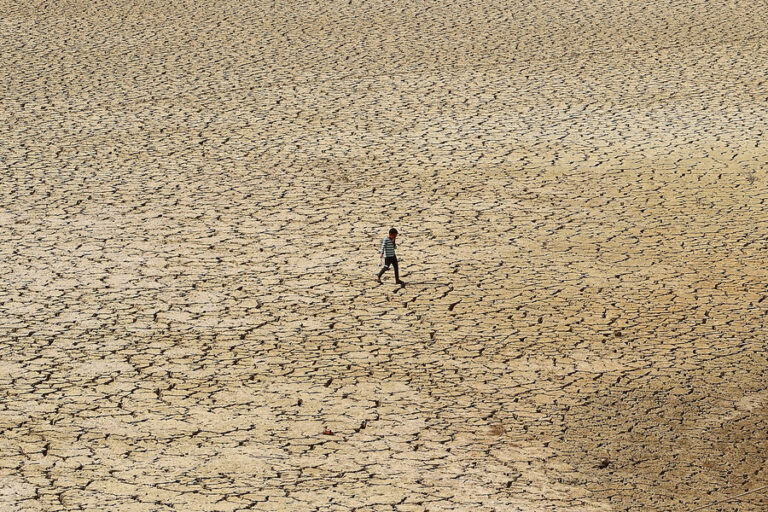
Terrain & Climate: Crossing over 2,500 km of harsh desert means facing intense heat, freezing nights, sandstorms, and remote locations with minimal access to water or shade.
Physical Challenge: The journey involves long distances on foot, often over uneven or shifting sand, while managing limited supplies and physical exhaustion.
Geopolitical Complexity: Certain regions of the Sahara have added safety risks due to border tensions or instability. Navigating these areas requires deep preparation and governmental support.
Logistical Cost: Adding another person significantly increases costs — from transport and permits to food, camel support, and risk insurance.
Guided Pilgrimage: This is also a personal and spiritual undertaking, with deep cultural, ancestral, and emotional layers. Travelling in tandem with local guide is part of its integrity.
I appreciate your enthusiasm and support deeply. If you’d like to walk with me in spirit, I’ll be sharing stories, updates, and reflections as the journey unfolds — and there may be community events or speaking opportunities you can join later.
While Al-Qaeda itself isn’t present in the specific area I plan to cross, affiliated groups do operate in parts of the Sahara — mostly concentrated in Sahelian border regions farther south, such as Mali, Niger, and Burkina Faso.
The Tunisian–Algerian border is known to be sensitive and will likely be the trickiest section of the meharee (desert crossing). However, this part of the journey will be approached in collaboration with local and national authorities, with formal border-crossing plans and government-supported permissions in both Tunisia and Algeria.
By taking this approach, we aim to ensure relative safety, cultural respect, and full transparency while retracing these ancestral desert routes.
The itinerary and design of this journey is being overseen by Régis Belleville, often referred to as “the Sahara explorer of our times.”
Régis is mentoring me every step of the way — offering guidance on:
Geopolitical and safety considerations
Terrain knowledge and environmental hazards
Logistical feasibility and survival planning
His expertise spans decades of exploration across the Sahara, and his mentorship blends pragmatic planning with encouraging realism. As he told me:
“If you really want to do it, you can. You may fail a few times, but if you want to, you will do it.”
This route is not simply a line on a map — it’s a living pathway, drawn with awareness of current realities and ancestral memory. Every step is chosen with care.
This project requires significant preparation due to the complexity of the terrain, safety logistics, geopolitical coordination, and the sheer physical demands of walking over 2,500 km through the Sahara.
It’s not something I can or would rush.
The current plan is to depart in late 2027 or early 2028, with the goal of completing the crossing before sandstorm season begins, which typically intensifies by mid-year.
This window also allows time for:
Route mapping and water point verification
Governmental approvals and cross-border coordination
Physical training and survival conditioning
Cultural consultation and ancestral research
Fundraising and gear/testing expeditions
Updates will be shared along the way as the project evolves.
This walk is more than a physical challenge for me. It is a pilgrimage of sort and the occasion to bring awareness on the First Nations of North Africa: The Amazigh who are still not recognised by the Tunisian constitution.
I grew up in Algerian Sahara and Tunisia alongside France and this is a retracing of my own steps and of my ancestors steps. Much knowledge tied to the Sahara and North Africa can help our evolving world and current environmental and social crisis. In the long term, this project will also be coupled with cultural conservation and awareness on water practices and ancient health practices that made the Amazigh the strong and free peopl
This walk is far more than a physical challenge — it is a pilgrimage.
It is a return to the lands that shaped me, and a call to honour the First Peoples of North Africa: the Amazigh, who are still not officially recognised in the Tunisian constitution.
I was raised between the Algerian Sahara, Tunisia, and France. This journey is a retracing — of my own steps and of the ancestral pathways that came before me.
Much of the wisdom embedded in Sahara culture — from ancient water knowledge to herbal and somatic health practices — holds answers for the crises we face today: environmental collapse, cultural amnesia, and disconnection from the land.
In the long term, this walk is the beginning of a greater mission:
To bring visibility to the cultural richness and resilience of the Amazigh people
To support cultural conservation projects across the region
And to document ancestral practices that once made Amazigh societies strong, sustainable, and free
This is a walk for remembrance — and a walk for the future.
e they have been for thousands of years.
You can support this journey in simple but powerful ways:
🔹 Spread the word
Share the story, the vision, and the purpose behind this walk with your community — online or in real life. Visibility helps create momentum and unlock unexpected opportunities.
🔹 Donate
Your contributions help cover essential costs like permits, guide support, camel logistics, gear, documentation tools, and cultural preservation materials. Every donation, big or small, is a step toward making this vision possible. Click here to donate.
🔹 Connect us to sponsors or funders
Do you know someone who supports cultural, ecological, or Indigenous-led initiatives? Introduce us. A personal connection can open the door to meaningful partnerships.
💌 You can also sign up to the email list to follow the journey, or reach out directly at:
📬 womenmakewaves.contact@gmail.com
I’ll be sharing updates, reflections, and behind-the-scenes moments as the journey unfolds — both the preparation and the crossing itself.
You can follow along here:
🌐 Website: www.womenmakewaves.com.au (journal entries, project updates & donation portal)
📬 Email Newsletter: Sign up on the site to receive occasional updates, stories from the desert, and invitations to community events
📸 Instagram: @womenmakewaves (photos, voice notes, field reflections, and videos)
🎙️ YouTube (Coming Soon): Personal video logs, interviews, and visual storytelling
📰 Media & Press: Visit the “Media” page for interviews, articles, and podcast episodes covering the journey
Some areas of the desert have no signal — but when I resurface, you’ll hear from me 🌍
That’s a very personal question — it depends on what you’re used to!
I’ll be walking during the cooler season to avoid the extreme summer heat, with daytime temperatures expected around 20–25°C. However, due to climate shifts, conditions can vary wildly and dehydration is still a very probable risk.
Some days may still be much hotter than expected, especially in exposed terrain.
Nights can fall below freezing, which makes warmth and insulation essential — not just for comfort, but for safety.
Sleeping above ground level is important to avoid attracting cold-blooded animals like snakes and scorpions, who seek warmth at night.
In short: yes, it will be hot at times — but also cold, dry, windy, and unpredictable.
That’s part of the magic and the challenge!